
Before the internet, most of us had no real way to compare the evening news, a newspaper, a government statement, an overseas outlet, and raw documents in real time. If Walter Cronkite—or later CNN—said it, we generally assumed somebody had done the sorting.
Then along came the internet.
The internet gave ordinary people access to corrections, leaked documents, public records, video, and competing accounts. That was genuinely good. But it also gave every liar, grifter, partisan operator, and bored guy with a podcast the same distribution power as a newsroom.
So now we know institutions can be wrong, biased, or self-protective—but we are also drowning in people who have confused access to information with the ability to evaluate it.
Since we’re already back in time…
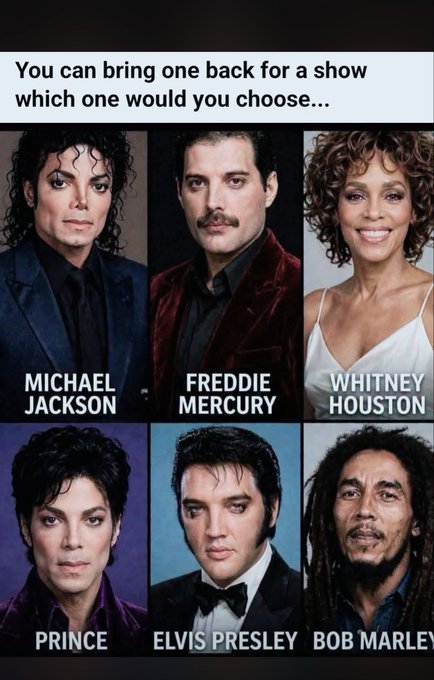
While my Momma would pick Elvis, I’d love it if Freddie Mercury could do one more show.
And finally, my conversation with Katie today was amusing.
Katie and I were texting and she mentioned a laundry mat. I told her it was laundromat. She didn’t believe me and proceeded to look it up and have Google pronounce it for her.
Somehow, that morphed into foreign language and I explained that after 2 years of French in high school, testing out of French I in college and taking French II, the only things I remembered how to say were:
- The word for pig
- My name is…
- Numbers to 40
- So so, thanks
- Do you want to go to bed with me tonight?
“Do you want to go to bed with me tonight!?!?” she asked with astonishment. So I sent her the link to the song, “Voulez-vous coucher avec moi (ce soir)” from 1974 by Lady Marmalade. She let me know she too had heard that song over 100 times and would sing along not having a clue what she was saying. 🙄
At least I know that where you go to wash clothes isn’t called a laundry mat. Heh. In the end, we decided we both could speak pirate and as landlubbers, we had a communication connection.

Now you know: Sailors used to pour oil into the ocean during storms to calm the waves, and ships were required to carry “storm oil” for this purpose until the late 20th century.