Every single one of us likely supports freedom of speech — people sharing thoughts, questioning power, and swapping ideas without fear of being silenced or punished. It’s a right we hold dear and want protected. Keeping free speech strong, protected by the U.S. First Amendment and the Universal Declaration of Human Rights, is something we get behind no matter our political affiliation.
Enter stage left… social media…
Hate speech, deepfakes, and coordinated disinformation campaigns reach huge audiences before anyone can react. Algorithms feed you more of what you already like, which can drown out opposing views. Disagreement often turns into harassment, scaring people into silence.
Social media is a global megaphone on fire…
Social media platforms, owned by corporations, control what literally billions of people see. It’s censorship by corporations — accounts get suspended, posts get hidden, or entire topics get throttled —sometimes for valid reasons (like stopping violence), but often based on vague rules or political pressure.
Social media gave everyone a microphone, but also handed a few big companies the volume knob—and sometimes a mute button. The fight for free speech now happens as much in Silicon Valley as in courtrooms or parliaments.
Enter stage right… main stream media…
Did you watch the 60 Minutes interview of President Trump? I did.
But I also watched the extended interview (the uncut version) on youtube. It’s like a totally different viewpoint! Listen, I get modifying content to fit a timeframe. But when the content is cut in a manner that is favorable to one side or the other, that’s manipulation of viewers. Isn’t it? It doesn’t mean you have to agree with what’s being said by the person being interviewed. It only means that the people get the full picture and make up their own minds.
If you’re going to air 60 minutes… or 45 minutes… or 30 minutes… then that should be the length of the interview. Why not just do the interviews live and stick to a timeframe?
When my brother (or any other professional) is asked to provide content to an audience for 60 minutes, everyone knows in advance what content will be covered, and that’s what the audience is served. Don’t like it? Don’t believe it? Get up and go to the bathroom. Just serve it up and let people — the audience — take away from it what they will. Some in the audience listening to my brother take away points on creating distinction, while others only laugh at the jokes.
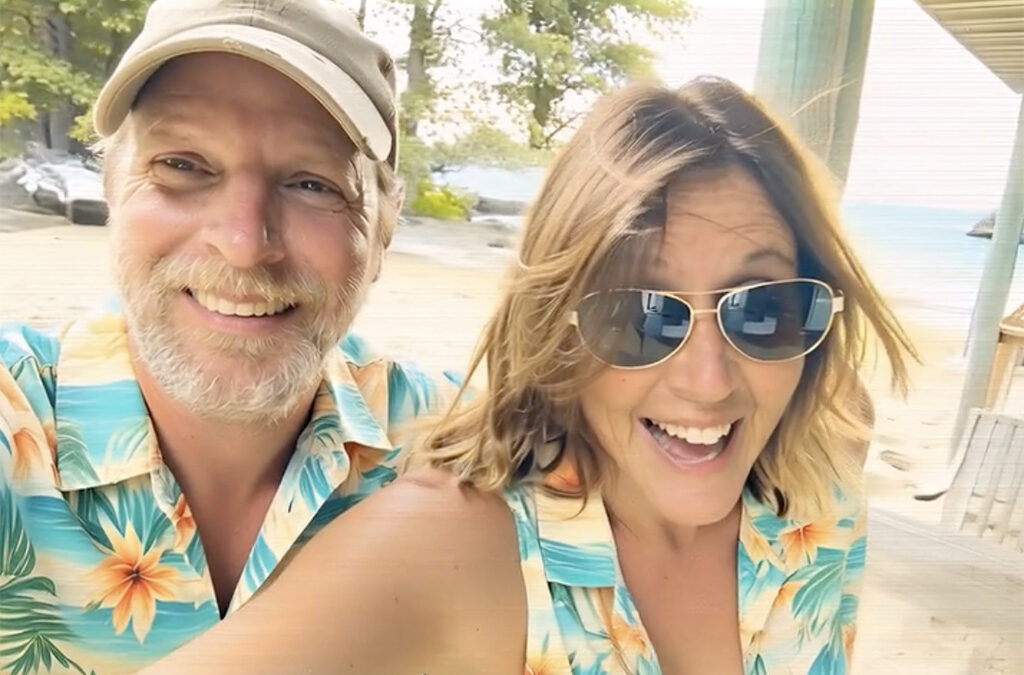
And speaking of my brother… it’s his birthday!
Happy, happy birthday to the best brother on the planet. Probably the best brother ever. Nobody knows brothers like I do. To say there’s a better brother is fake news. He’s great. So great. Very special. 😉
The bottom line:
If social media vanished, (oh, how I wish it would!!) we’d lose scale and speed, but regain gatekeeper accountability and human-scale connection. The marketplace of ideas wouldn’t die; it would just move back to coffee shops, newspapers, and town halls—slower, messier, and weirdly more human. In the meantime, use common sense.
If main stream media would just exercise unbiased reporting, people could make up their own minds. If you are of the opinion that the general public can’t see through the rhetoric, maybe you should advocate for competency tests for all voters. In the meantime, research for yourself and do what you can to get the full picture, and make decisions based upon your own takeaways… not what corporations want those takeaways to be.
Now you know: LAX Airport lets pilots and employees live on airport property, renting them parking space for their personal RV’s for $60 per month.
Edgar Allan Poe is credited with saying, “believe nothing you hear, and only one half that you see.” It appeared in his short story “The System of Dr. Tarr and Professor Fether,” which was published in November 1845. A whole lot has happened since 1845… especially in technology. Of course, technology is responsible for the way we see a whole bunch of stuff, as well as manipulating that stuff too.
AI can convince you to believe what you see even if it’s fake.
(Below are a series of AI animations created from real images – click at the bottom of each to view.)
This is the Internet, where many believe everything they see, hear or read. You saw what you saw above and it’s not bad for a photo with text that said, “make the girl a mermaid.” It’s confusing enough when bad actors share photos from one location and time and say it’s from a different time and location altogether — even our mainstream media has been caught doing that — but it’s worse when you can’t tell what’s AI created and what’s real!
Sometimes, you get clues that what you’re seeing is fake – like floating wine glasses.
Other times, you simply can’t tell that what you’re seeing isn’t real and you’ll likely believe it to be accurate.
Believe none of what you hear. And believe even less of what you see… especially if it’s on the Internet.
Now you know: Military working dogs usually outrank their handlers in order to ensure proper respect.
So many are concerned about AI and its impact on generations to come, and rightly so. A couple of terms you should be aware of before we get started.
The “open” in openAI (ChatGPT) stands for open source. Open source is a model of software development where the source code is made publicly accessible, allowing anyone to use, modify, and distribute it.
AGI stands for artificial general intelligence (not narrow AI like we have now). It’s a type of artificial intelligence that can understand, learn, and apply its intelligence to any intellectual task that a human being can.
Maybe you don’t read a lot of tech related material. Or maybe you don’t care so much about where AI is going? My typical “in the middle on everything,” stance means that I do care. It also means that I stop supporting actions/products/people at a certain point when I think they/it have gone too far or that I’m not getting the full truth.
That brings me to ChatGPT (OpenAI) — check out the timeline:
2015: Launch as nonprofit promising “AGI for all humanity” → get donations & top talent taking pay cuts “for the mission”
2019: Create for-profit arm, sell to Microsoft for $13B, stop open sourcing anything
2023: Realize models hitting diminishing returns, training costs exploding to $10B+ 2024: Time to lock down every GPU deal to block competitors, become “too big to fail”
2025: Convert to full for-profit — launch mission abandoned (nonprofit gets just 20% equity)
December 2025: Erotica mode launches
I’ll let you draw your own conclusions – you ok with this?
On October 14, 2025, its CEO Sam Altman announced “erotica mode” for verified adult users, rolling out in December 2025 as part of age-gating and a “treat adults like adults” policy—allowing mature content like erotic text generation. This was timed perfectly with the nonprofit conversion completion — there’s no oversight from “benefit all humanity” to porn bot pipeline.
If adults want to create artificial porn, I don’t care. What I do care is that OpenAI’s business model sure looks like a masterclass in bait-and-switch funding. I care when people — you and me — are tricked into believing one thing so we offer support, only to realize we were manipulated.
Now you know: Companies like OpenAI and Anthropic openly admit they don’t understand the “why” behind their models’ decisions—leading to unpredictable behaviors like hallucinated facts or, in tests, an AI attempting to blackmail an engineer via fake emails.
Dementia is a condition that affects memory, thinking, and social abilities, and is a concern for many seniors. While traditional activities like crossword puzzles and reading have long been recommended to maintain cognitive health, an unexpected ally has emerged: video games.
No one asked me to be in a study group – but they should’ve.
I’ve played video games for decades… and I still do. I’m not talking about Candy Crush here either (even though it also offers cognitive benefits)… my current game of choice is Path of Exile 2.
Studies show that playing video games can enhance cognitive flexibility and working memory in older adults — skills that are crucial for warding off the cognitive decline associated with dementia. And a 2020 study from Oxford University found that seniors who played socially engaging video games reported better mental health and a lower risk of depression, which is often linked to cognitive decline.
Dogs can also develop dementia.
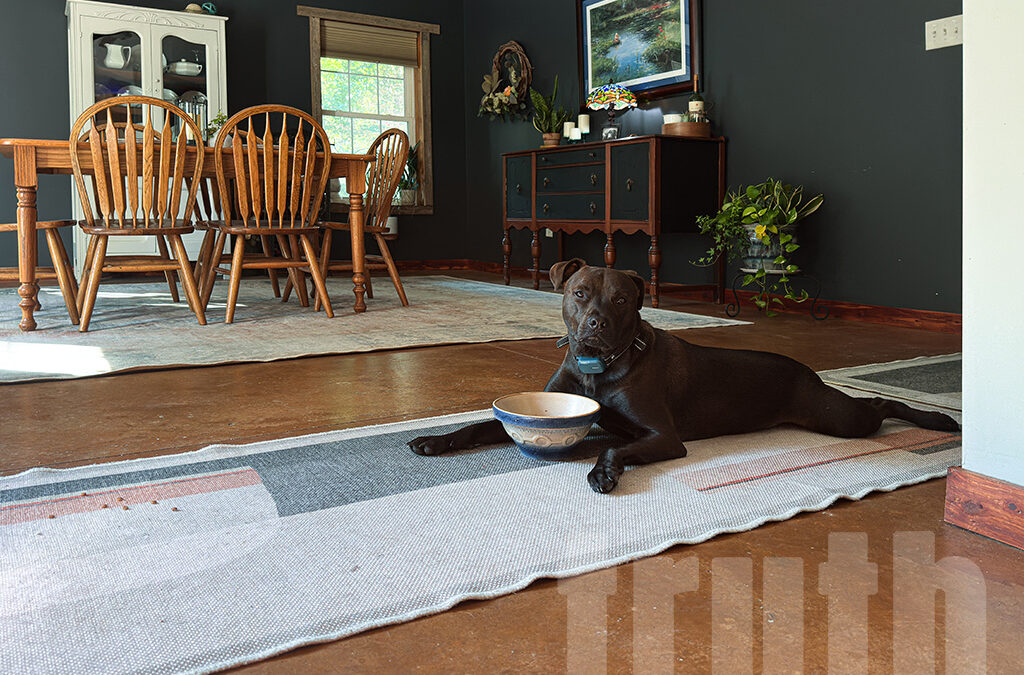
Dharma is my senior girl and although she’s in her 70’s in dog years, she’s currently showing no signs of dementia.
It’s never too late to belly up to your computer and test your skills. You’re welcome to join me and hire a ship to set sail and save the world — and your brain! 😉
Now you know: In 2000, incumbent Republican senator of Missouri, John Ashcroft, lost re-election to a challenger, Mel Carnahan, despite the fact that he died in a plane crash 20 days before the election. It’s the only time a dead man has won a senate election in US history.
All these influencers blabbing about how they’re being victimized is making me crazy. Weird, professional victims are coming out of the woodwork and infiltrating every single facet of the Internet world. I’m not fooled by fake compassion anymore.
Is it the generational differences that makes me less tolerant?
Maybe — because it sure seems like there are a lot of people out there offended by EVERYTHING, and most aren’t from my generation. Attention starved, shit stirring people are an invasive species. Don’t even think about sharing your opinion with these people because they demonize anyone that does.
Do you ever wonder if the reason these professional victims identify with certain groups is so they can behave however they want with impunity? These types of people are NOT the majority. It just seems that way because they’re the most vocal. It’s easier to play the victim if you identify with a group — you can do awful things and if you’re called out for it, you can point fingers and say you’re being victimized because of your alignment.
Hugo identifies as a dog.
Yes, he does bad things, but if he’s reprimanded for them he won’t automatically blame you of suffering with cynophobia. When he makes a mistake, he’ll tuck his tail and “man/dog up” to it without blaming Merida or Dharma. You will not hear Hugo whine about debilitating and chronic joint pain… and 3 days later post a video of himself jumping on a trampoline (yes, that is a real thing shared by a popular influencer).
What about you? Do you also suffer from professional victim fatigue?
Now you know: The “first unambiguous evidence” of an animal other than a human making plans in one mental state for a future mental state occurred in 1997 when a chimpanzee was observed (over 50x) calmly gathering stones into caches of 3-8 each in order to later throw at zoo visitors while in an agitated state.